|
1. 我们的的操作流程:
用户在我们系统登录页面,不用点注册或者登录,而是点击Gitee图标(如下图),跳转到Gitee的登录页,登陆后点击授权按钮,然后获得授权码,然后跳转回我们的系统,,我们用这个授权码获取Token,成功获取到Token后,利用token获取Gitee用户信息,然后,把这个userinfo,注册或者登录我们自己的系统(如果这个社交账号之前没有登陆过,就自动注册并登录,根据Gitee返回的ID判断),
我们这次的OAuth2,使用授权码方式
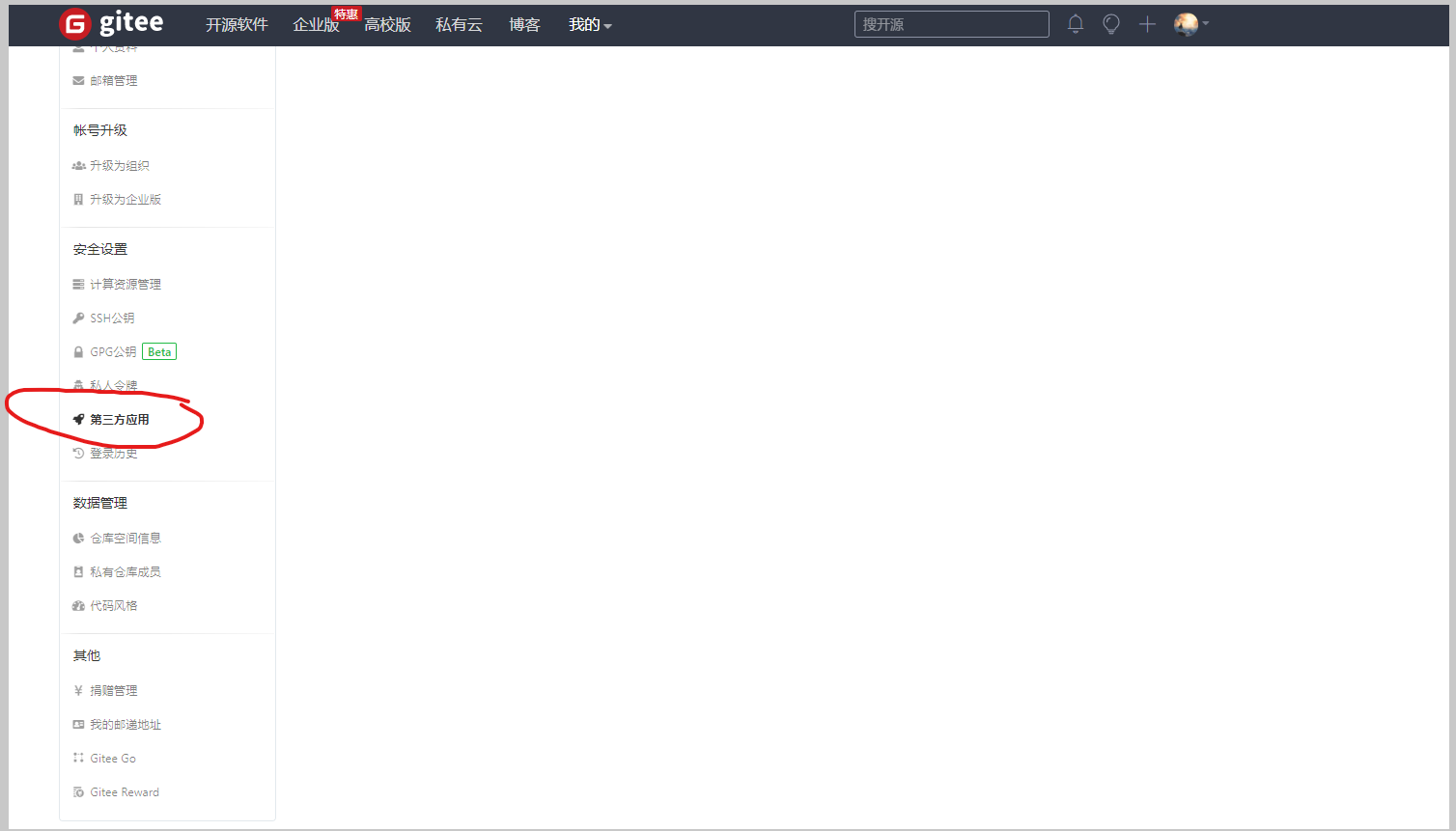
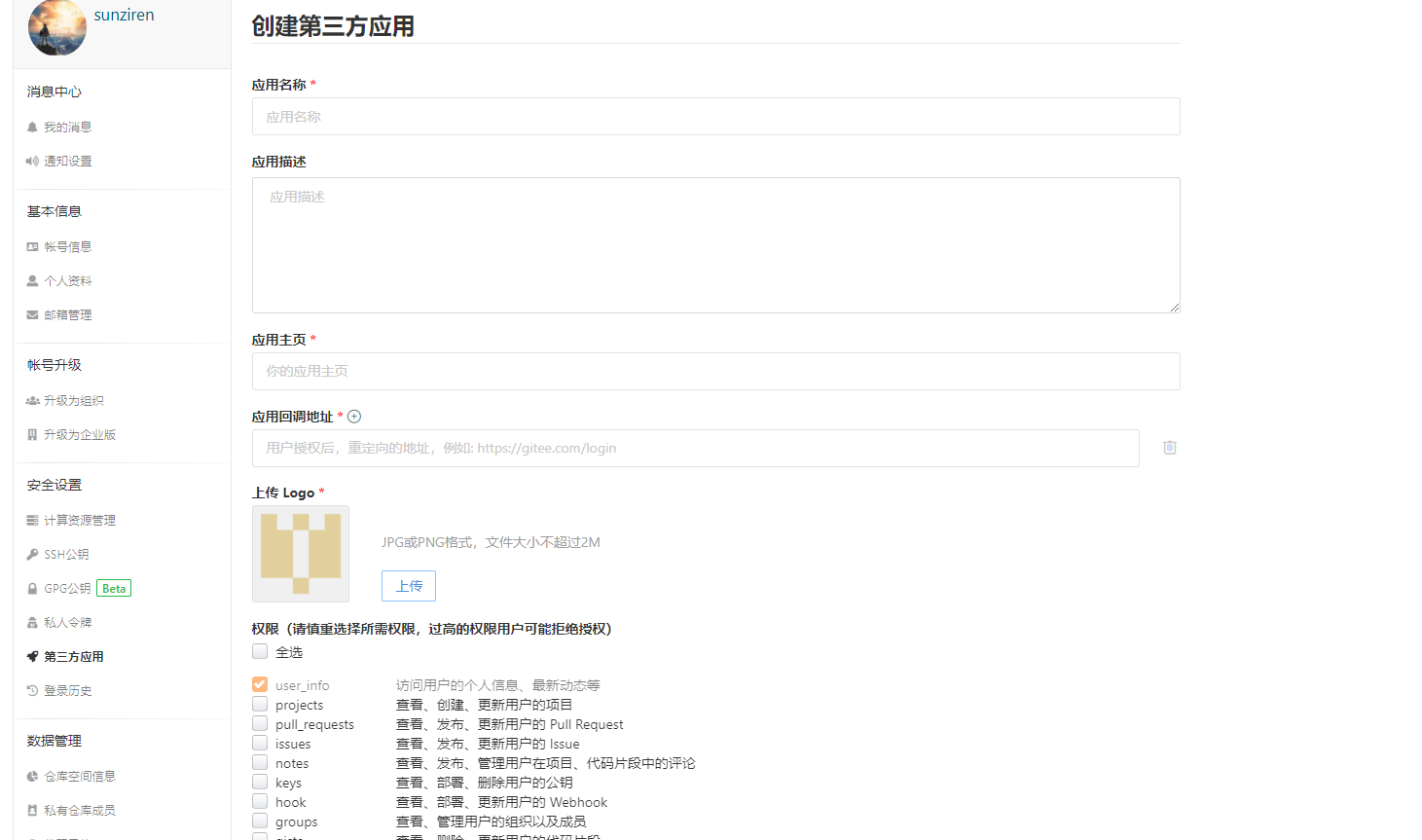
2. 首先我们登录自己的Gitee,在自己的设置页面中,进入第三方应用,并新建一个应用,应用名称和图标,就是我们自己的系统
3. 创建好应用后,记住自己的Client ID和Client Secret,然后还有一个重要的东西是设置好自己的应用回调地址,这个就是用户在gitee点击授权后,Gitee把授权码给我们系统的哪个接口。注意,接口要接收code,
@RequestParam("code") String code
4. 现在把gitee小图标放到我们的登录页,img外面包一层a标签,点击后跳转到下面这个地址
https://gitee.com/oauth/authorize?client_id={client_id}&redirect_uri={redirect_uri}&response_type=code
注意,把地址中的Client ID和redirect_uri替换为,你在第三步设置和获得的值。
5.现在用户点击图标就会去gitee,登录授权后,就会去我们的回调地址,也就是controller接口,而且会带一个授权码code,这个code,我们就可以拿着去换token,然后拿着Token获取用户信息,然后拿着这个用户信息,我们就可以帮用户登录或者注册了
这里我把我的回调地址接口贴上来,也把Token和用户信息,映射的实体也贴上来。我把httpUitl这个工具类也贴上来
 1    @GetMapping("/oauth2.0/gitee/success")
 2     public String gitee(@RequestParam("code") String code) throws Exception {
 3         Map<String,String> bodys = new HashMap<>();
 4         bodys.put("grant_type","authorization_code");
 5         bodys.put("code",code);
 6         bodys.put("client_id","你的在第三步获取的client_id");
 7         bodys.put("redirect_uri","你在第三步写的回调地址");
 8         bodys.put("client_secret","你在第三步写的client_secret");
 9         //1.根据code换取GiteeAccessToken;
10         HttpResponse response_GiteeAccesstoken = HttpUtils.doPost("https://gitee.com", "/oauth/token", "post", new HashMap(), new HashMap(), bodys);
11
12         //处理返回值
13         if(response_GiteeAccesstoken.getStatusLine().getStatusCode() == 200){
14             //获取到了GiteeAccessToken
15             String tokenJson = EntityUtils.toString(response_GiteeAccesstoken.getEntity());
16             GiteeAccessToken token = JSON.parseObject(tokenJson, GiteeAccessToken.class);
17             //根据Token,通过查询Gitee Open Api获取用户信息
18             Map<String,String> query = new HashMap<>();
19             query.put("access_token", token.getAccess_token());
20             HttpResponse response_userInfo = HttpUtils.doGet("https://gitee.com", "/api/v5/user", "get", new HashMap(), query);
21             String giteeUserInfoJson = EntityUtils.toString(response_userInfo.getEntity());
22             GiteeUserInfo giteeUserInfo = JSON.parseObject(giteeUserInfoJson, GiteeUserInfo.class);
23
24             //登录或者注册这个社交用户
25             //1.当前用户如果是第一次进入网站,就自动注册(为当前社交用户生成一个会员信息账号,以后这个社交账号就对应指定的会员)
26
27         }else {
28             return "redirect:http://auth.gulimall.com/login.html";
29         }
30
31         //2.登录成功后跳回首页
32         return "redirect:http://gulimall.com";
33     }
token的java映射实体
public class GiteeAccessToken {

    private String access_token;
    private String token_type;
    private long expires_in;
    private String refresh_token;
    private String scope;
    private long created_at;

}
用户信息的映射实体
public class GiteeUserInfo {

    private long id;

    private String login;

    private String name;

    private String avatar_url;

    private String url;

    private String html_url;

    private String followers_url;

    private String following_url;

    private String gists_url;

    private String starred_url;

    private String subscriptions_url;

    private String organizations_url;

    private String repos_url;

    private String events_url;

    private String received_events_url;

    private String type;

    private String blog;

    private String weibo;

    private String bio;

    private long public_repos;

    private long public_gists;

    private long followers;

    private long following;

    private long stared;

    private long watched;

    private String created_at;

    private String updated_at;

    private String email;

}
HttpUtils工具类
import org.apache.commons.lang.StringUtils;
import org.apache.http.HttpResponse;
import org.apache.http.NameValuePair;
import org.apache.http.client.HttpClient;
import org.apache.http.client.entity.UrlEncodedFormEntity;
import org.apache.http.client.methods.HttpDelete;
import org.apache.http.client.methods.HttpGet;
import org.apache.http.client.methods.HttpPost;
import org.apache.http.client.methods.HttpPut;
import org.apache.http.conn.ClientConnectionManager;
import org.apache.http.conn.scheme.Scheme;
import org.apache.http.conn.scheme.SchemeRegistry;
import org.apache.http.conn.ssl.SSLSocketFactory;
import org.apache.http.entity.ByteArrayEntity;
import org.apache.http.entity.StringEntity;
import org.apache.http.impl.client.DefaultHttpClient;
import org.apache.http.message.BasicNameValuePair;

import javax.net.ssl.SSLContext;
import javax.net.ssl.TrustManager;
import javax.net.ssl.X509TrustManager;
import java.io.UnsupportedEncodingException;
import java.net.URLEncoder;
import java.security.KeyManagementException;
import java.security.NoSuchAlgorithmException;
import java.security.cert.X509Certificate;
import java.util.ArrayList;
import java.util.List;
import java.util.Map;

/**
 * @author sunziren
 * @date 2021/8/13 16:10
 */
public class HttpUtils {

    /**
     * get
     *
     * @param host
     * @param path
     * @param method
     * @param headers
     * @param querys
     * @return
     * @throws Exception
     */
    public static HttpResponse doGet(String host, String path, String method,
                                     Map<String, String> headers,
                                     Map<String, String> querys)
            throws Exception {
        HttpClient httpClient = wrapClient(host);

        HttpGet request = new HttpGet(buildUrl(host, path, querys));
        for (Map.Entry<String, String> e : headers.entrySet()) {
            request.addHeader(e.getKey(), e.getValue());
        }

        return httpClient.execute(request);
    }

    /**
     * post form
     *
     * @param host
     * @param path
     * @param method
     * @param headers
     * @param querys
     * @param bodys
     * @return
     * @throws Exception
     */
    public static HttpResponse doPost(String host, String path, String method,
                                      Map<String, String> headers,
                                      Map<String, String> querys,
                                      Map<String, String> bodys)
            throws Exception {
        HttpClient httpClient = wrapClient(host);

        HttpPost request = new HttpPost(buildUrl(host, path, querys));
        for (Map.Entry<String, String> e : headers.entrySet()) {
            request.addHeader(e.getKey(), e.getValue());
        }

        if (bodys != null) {
            List<NameValuePair> nameValuePairList = new ArrayList<NameValuePair>();

            for (String key : bodys.keySet()) {
                nameValuePairList.add(new BasicNameValuePair(key, bodys.get(key)));
            }
            UrlEncodedFormEntity formEntity = new UrlEncodedFormEntity(nameValuePairList, "utf-8");
            formEntity.setContentType("application/x-www-form-urlencoded; charset=UTF-8");
            request.setEntity(formEntity);
        }

        return httpClient.execute(request);
    }

    /**
     * Post String
     *
     * @param host
     * @param path
     * @param method
     * @param headers
     * @param querys
     * @param body
     * @return
     * @throws Exception
     */
    public static HttpResponse doPost(String host, String path, String method,
                                      Map<String, String> headers,
                                      Map<String, String> querys,
                                      String body)
            throws Exception {
        HttpClient httpClient = wrapClient(host);

        HttpPost request = new HttpPost(buildUrl(host, path, querys));
        for (Map.Entry<String, String> e : headers.entrySet()) {
            request.addHeader(e.getKey(), e.getValue());
        }

        if (StringUtils.isNotBlank(body)) {
            request.setEntity(new StringEntity(body, "utf-8"));
        }

        return httpClient.execute(request);
    }

    /**
     * Post stream
     *
     * @param host
     * @param path
     * @param method
     * @param headers
     * @param querys
     * @param body
     * @return
     * @throws Exception
     */
    public static HttpResponse doPost(String host, String path, String method,
                                      Map<String, String> headers,
                                      Map<String, String> querys,
                                      byte[] body)
            throws Exception {
        HttpClient httpClient = wrapClient(host);

        HttpPost request = new HttpPost(buildUrl(host, path, querys));
        for (Map.Entry<String, String> e : headers.entrySet()) {
            request.addHeader(e.getKey(), e.getValue());
        }

        if (body != null) {
            request.setEntity(new ByteArrayEntity(body));
        }

        return httpClient.execute(request);
    }

    /**
     * Put String
     * @param host
     * @param path
     * @param method
     * @param headers
     * @param querys
     * @param body
     * @return
     * @throws Exception
     */
    public static HttpResponse doPut(String host, String path, String method,
                                     Map<String, String> headers,
                                     Map<String, String> querys,
                                     String body)
            throws Exception {
        HttpClient httpClient = wrapClient(host);

        HttpPut request = new HttpPut(buildUrl(host, path, querys));
        for (Map.Entry<String, String> e : headers.entrySet()) {
            request.addHeader(e.getKey(), e.getValue());
        }

        if (StringUtils.isNotBlank(body)) {
            request.setEntity(new StringEntity(body, "utf-8"));
        }

        return httpClient.execute(request);
    }

    /**
     * Put stream
     * @param host
     * @param path
     * @param method
     * @param headers
     * @param querys
     * @param body
     * @return
     * @throws Exception
     */
    public static HttpResponse doPut(String host, String path, String method,
                                     Map<String, String> headers,
                                     Map<String, String> querys,
                                     byte[] body)
            throws Exception {
        HttpClient httpClient = wrapClient(host);

        HttpPut request = new HttpPut(buildUrl(host, path, querys));
        for (Map.Entry<String, String> e : headers.entrySet()) {
            request.addHeader(e.getKey(), e.getValue());
        }

        if (body != null) {
            request.setEntity(new ByteArrayEntity(body));
        }

        return httpClient.execute(request);
    }

    /**
     * Delete
     *
     * @param host
     * @param path
     * @param method
     * @param headers
     * @param querys
     * @return
     * @throws Exception
     */
    public static HttpResponse doDelete(String host, String path, String method,
                                        Map<String, String> headers,
                                        Map<String, String> querys)
            throws Exception {
        HttpClient httpClient = wrapClient(host);

        HttpDelete request = new HttpDelete(buildUrl(host, path, querys));
        for (Map.Entry<String, String> e : headers.entrySet()) {
            request.addHeader(e.getKey(), e.getValue());
        }

        return httpClient.execute(request);
    }

    private static String buildUrl(String host, String path, Map<String, String> querys) throws UnsupportedEncodingException {
        StringBuilder sbUrl = new StringBuilder();
        sbUrl.append(host);
        if (!StringUtils.isBlank(path)) {
            sbUrl.append(path);
        }
        if (null != querys) {
            StringBuilder sbQuery = new StringBuilder();
            for (Map.Entry<String, String> query : querys.entrySet()) {
                if (0 < sbQuery.length()) {
                    sbQuery.append("&");
                }
                if (StringUtils.isBlank(query.getKey()) && !StringUtils.isBlank(query.getValue())) {
                    sbQuery.append(query.getValue());
                }
                if (!StringUtils.isBlank(query.getKey())) {
                    sbQuery.append(query.getKey());
                    if (!StringUtils.isBlank(query.getValue())) {
                        sbQuery.append("=");
                        sbQuery.append(URLEncoder.encode(query.getValue(), "utf-8"));
                    }
                }
            }
            if (0 < sbQuery.length()) {
                sbUrl.append("?").append(sbQuery);
            }
        }

        return sbUrl.toString();
    }

    private static HttpClient wrapClient(String host) {
        HttpClient httpClient = new DefaultHttpClient();
        if (host.startsWith("https://")) {
            sslClient(httpClient);
        }

        return httpClient;
    }

    private static void sslClient(HttpClient httpClient) {
        try {
            SSLContext ctx = SSLContext.getInstance("TLS");
            X509TrustManager tm = new X509TrustManager() {
                public X509Certificate[] getAcceptedIssuers() {
                    return null;
                }
                public void checkClientTrusted(X509Certificate[] xcs, String str) {

                }
                public void checkServerTrusted(X509Certificate[] xcs, String str) {

                }
            };
            ctx.init(null, new TrustManager[] { tm }, null);
            SSLSocketFactory ssf = new SSLSocketFactory(ctx);
            ssf.setHostnameVerifier(SSLSocketFactory.ALLOW_ALL_HOSTNAME_VERIFIER);
            ClientConnectionManager ccm = httpClient.getConnectionManager();
            SchemeRegistry registry = ccm.getSchemeRegistry();
            registry.register(new Scheme("https", 443, ssf));
        } catch (KeyManagementException ex) {
            throw new RuntimeException(ex);
        } catch (NoSuchAlgorithmException ex) {
            throw new RuntimeException(ex);
        }
    }

}
工具类需要引入的依赖
<!--  引入HttpUtils 开始 -->
        <dependency>
            <groupId>com.alibaba</groupId>
            <artifactId>fastjson</artifactId>
            <version>1.2.15</version>
        </dependency>
        <dependency>
            <groupId>org.apache.httpcomponents</groupId>
            <artifactId>httpclient</artifactId>
            <version>4.2.1</version>
        </dependency>
        <dependency>
            <groupId>org.apache.httpcomponents</groupId>
            <artifactId>httpcore</artifactId>
            <version>4.2.1</version>
        </dependency>
        <dependency>
            <groupId>commons-lang</groupId>
            <artifactId>commons-lang</artifactId>
            <version>2.6</version>
        </dependency>
        <dependency>
            <groupId>org.eclipse.jetty</groupId>
            <artifactId>jetty-util</artifactId>
            <version>9.3.7.v20160115</version>
        </dependency>
        <!--  引入HttpUtils 结束 -->
来源:https://www.cnblogs.com/sunziren/p/15226086.html |



 發表於 2021-9-4 11:08:00